Argentina 3-1 Netherlands: the 1978 World Cup final
White and sky-blue flags everywhere at River Plate, ribbons and confetti coming down onto the pitch before they'd even kicked off. Plenty had been written about some pretty ordinary football during this World Cup. Now Argentina had their first world title in sight, the final at home.
Holland were back for another go four years after Munich, though without two of the players who'd made that side tick. Willem van Hanegem had pulled out after Ernst Happel told him he wouldn't play in the first couple of games. He was already struggling mentally and physically, and reckoned he'd only get on everyone's nerves if he was left sitting on the bench.
Johan Cruyff stayed home for a far darker reason. He explained it years later, in 2008: the year before the tournament, he'd been held at gunpoint in his Barcelona home, his wife had been tied up and their children were in the flat. Police guarded the house afterwards and took the kids to school. He wasn't about to leave his family and head off to Argentina.
To play a World Cup you have to be 200%. There are moments when there are other values in life.
Holland still had Rep and Rensenbrink, though, and Happel had got them back to a final.
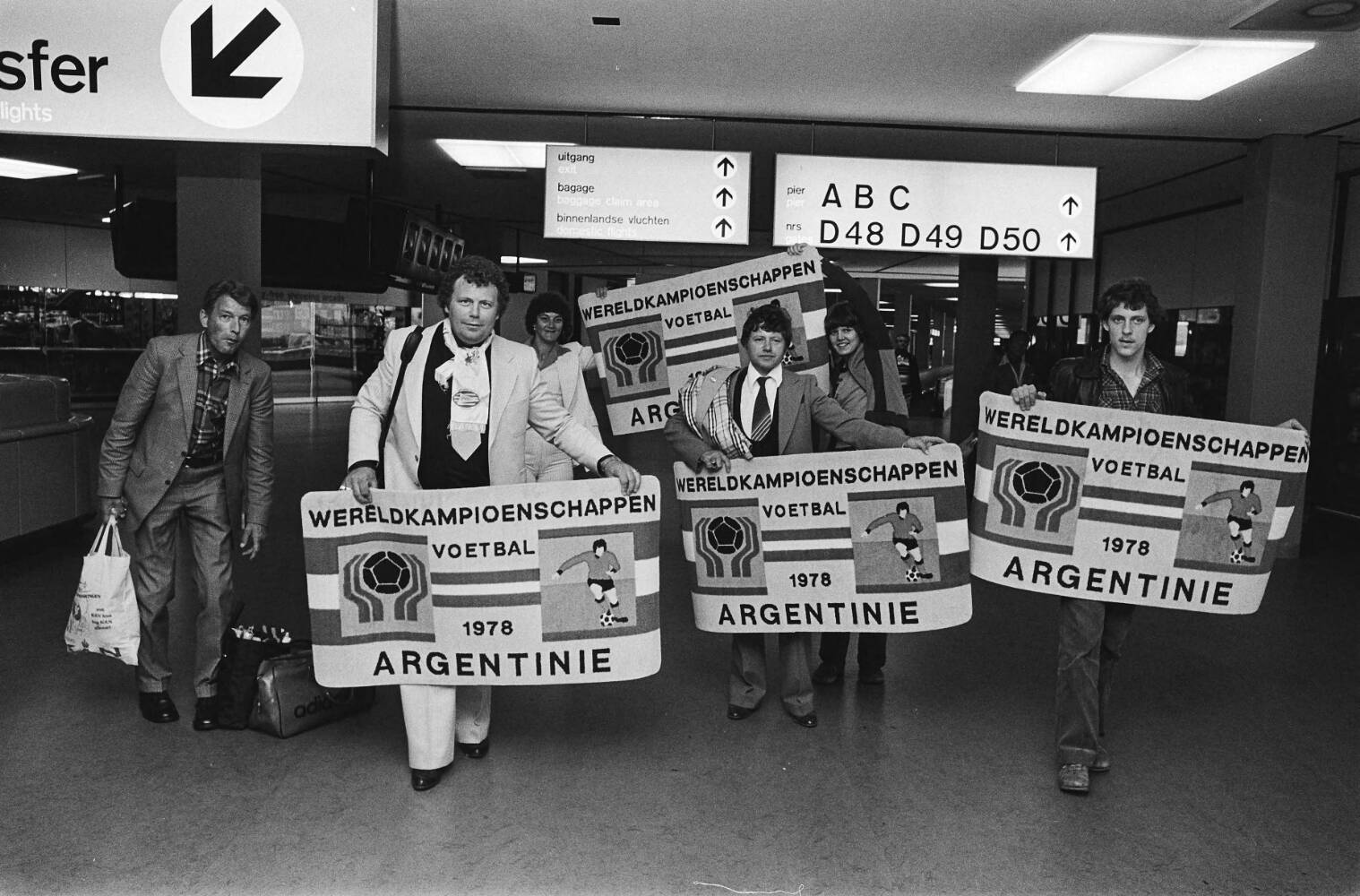
Match telegram
· 1978 World Cup final · after extra time (1–1 at 90 minutes)Argentina 3:1 Netherlands
Estadio Monumental, Buenos Aires. Referee: Sergio Gonella, Italy.
Goals: 38′ Kempes 1:0. 82′ Nanninga (Header) 1:1. 105′ Kempes 2:1. 116′ Bertoni 3:1.
Argentina: Fillol; Olguín, Galván, Passarella, Tarantini; Ardiles (66′ Larrosa), Gallego, Kempes; Bertoni, Luque, Ortiz (75′ Houseman).
Netherlands: Jongbloed; Jansen (73′ Suurbier), Brandts, Krol, Poortvliet; Neeskens, Haan, W. van de Kerkhof; R. van de Kerkhof, Rep (59′ Nanninga), Rensenbrink.
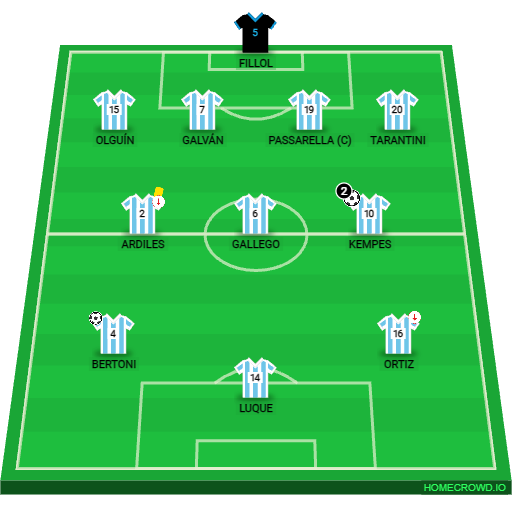
Argentina line-up
Menotti had Bertoni and Ortiz either side of Luque. Gallego covered in front of the defence, Ardiles kept things moving with short passes, and Kempes was to join the forwards. Passarella captained the side.
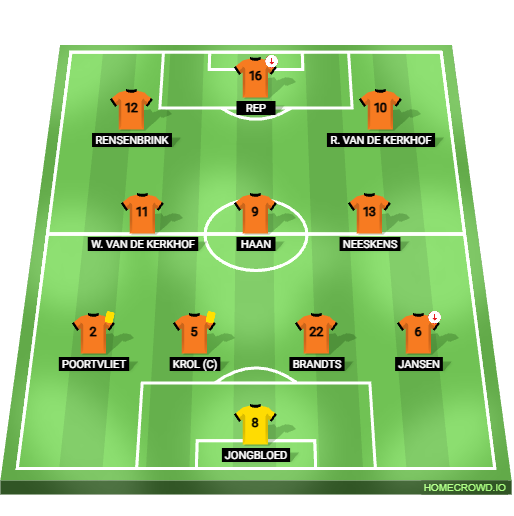
Netherlands line-up
Happel started Jansen on the right of the defence, Krol behind the rest when they needed cover, and Rep between René van de Kerkhof and Rensenbrink.
The first half
Rep heads one wide early on, then hits a volley and Fillol keeps it out. Holland could have been in front early on.
Argentina were finding room down the right, where Olguín pushed on to link with Bertoni. They put Holland under the most pressure when they moved the ball first time. Luque kept the centre-backs busy, Kempes was arriving from midfield at pace. With seven minutes left in the half Kempes gets through. He's falling as he hits it left-footed and puts it past Jongbloed. One-nil. Kempes was only 23, playing for Valencia and the only player in Argentina's squad based abroad.
Just before the break Neeskens heads the ball down to Rensenbrink. Fillol comes out and stops him. Argentina go in 1-0 up.
Fillol was already a top keeper in Argentina. At Racing he'd saved six penalties in 1972. He'd won the league with River in 1975, ending their eighteen-year wait. A mix of spring, reflexes and decisiveness.
The second half
Argentina dropped far too deep after the break. Gallego was sinking back into the defence. Luque and the wingers stayed up, Kempes kept joining them, and Ardiles was left trying to cover all that space in between. Holland kept winning the ball back.
Happel takes Rep off just before the hour and sends Nanninga on. Now Holland finally have a target up front who can make the ball stick. He lays it off for Neeskens and Haan to run onto, Brandts goes up as another target. Argentina have more and more high balls to defend. With eight minutes left Nanninga gets his head to a cross, 1-1.
Right near the end Rensenbrink nearly gets the winner. From near the byline he hits the post. Fillol had stopped him before the break, now the post keeps him out. The final goes to extra time.
Extra time
Kempes again. Near the end of the first period he drives between the defenders and into the box. Jongbloed blocks his first effort. Kempes follows up and forces the loose ball over the line. Two-one Argentina.
Holland don't get another equaliser. With about four minutes left Kempes and Bertoni combine, Bertoni finishes right-footed for 3-1. Kempes has scored twice in the final, six in the tournament. Argentina have their first World Cup.
After the final
Menotti put it down to attacking football.
César Luis Menotti after the final:
Our victory was a consequence of the team's very good offensive play. In the final match against the Netherlands, we focused above all on attack, and as a result, we won the world championship. The final match was a confrontation of two teams playing courageously. We won this match because all our players gave the maximum of their abilities.
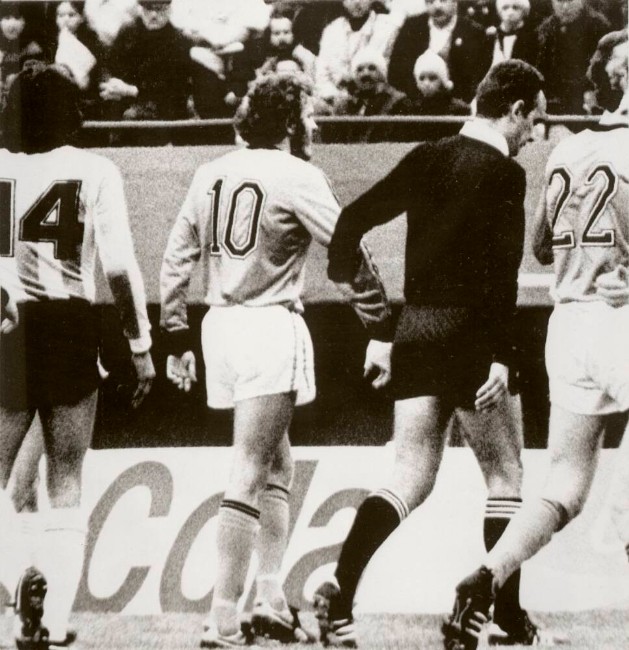
The Dutch were clear about what they thought of Gonella afterwards. The row had started before a ball was kicked. Argentina had objected to René van de Kerkhof's plaster support, so the referee took him aside before kick-off. Then came a match full of hard challenges and stoppages. The Dutch complaint was that Argentine handling and fouls had gone unpunished while Gonella kept breaking up their own play with his whistle. The Dutch committed plenty of fouls themselves. Schrijvers understood the anger, but he also thought Holland had to look at the chances they'd had.
Poul Annema's match report, alleging unpunished Argentine handling and fouls:
Luis Galvan mocht tot driemaal toe zijn hand tegen de bal zetten om te voorkomen dat een Nederlandse aanvaller, die kreeg. Zonder dat Gonella ook maar iets daartegen deed. Passarella, de aanvoerder, joeg met permissie van de arbiter op de enkels van de Nederlanders.
Luis Galvan was allowed to put his hand against the ball three times to stop a Dutch attacker from getting it. Without Gonella doing anything about it. Passarella, the captain, went for the Dutch players' ankles with the referee's permission.
Piet Schrijvers, quoted in a separate sports-desk article on the same page:
Alleen nu, al weer zoveel minuten later, zeg ik toch: we kunnen heel wat op die scheidsrechter schelden, maar je moet het eigenlijk toch bij jezelf zoeken. We hebben de kans gehad om wereldkampioen te worden.
Only now, so many minutes later, I still say: we can curse that referee all we want, but you really have to look at yourself. We had the chance to become world champions.
The tournament hadn't left everyone raving about the football. Too much caution. One verdict was that it had been four weeks of fairly ordinary stuff. Then the final gives you four goals, a late equaliser and a shot against the post with the World Cup there to be won. You'd think that would have kept the papers happy, but the verdicts were still mixed.
Agence France Presse, as quoted by NZZ:
Es war kein grosses Finalspiel, weil es zu sehr vom Kampf bestimmt war. Argentinien, unterstützt vom ganzen Volk, kämpfte leidenschaftlicher und gewann deshalb, weil es die einzige Ausnahmeerscheinung dieser Weltmeisterschaft in seinen Reihen hatte: Mario Kempes. Holland stürmte nach der Pause mit aller Macht, doch ohne spielerische Brillanz und Ideen.
It was not a great final, because it was too dominated by the physical contest. Argentina, backed by the whole nation, fought more passionately and won because they had the one exceptional player of this World Cup in their ranks: Mario Kempes. Holland attacked with all their might after the break, but without brilliance or ideas.
Die Presse, Vienna, as quoted by NZZ:
Das war ein Superfinale, die längst fällige Antwort auf den zu bedächtigen Fussball, der sich vor allem in Mitteleuropa breitmacht. Die nur Richtung Tor spielende argentinische Mannschaft hat verdient gewonnen in einem Spiel, das punkto Tempo, Unerbittlichkeit im Zweikampf und an Technik kaum zu überbieten war.
That was a superb final, the long-overdue answer to the over-cautious football that is spreading above all in Central Europe. The Argentine side, playing only towards goal, deserved to win a match that could hardly be surpassed for pace, uncompromising challenges and technique.
Il Giornale nuovo, Milan, as quoted by NZZ:
Der Final war hart, fast brutal hart. Ausschlaggebend für den Sieg waren die besseren Stürmerleistungen und die Topform von Argentiniens Torhüter Fillol. Schlecht pfiff Schiedsrichter Gonella.
The final was hard, almost brutally hard. The decisive factors in the victory were the better forward play and the outstanding form of Argentina's goalkeeper Fillol. Referee Gonella officiated poorly.
Afrique Sport, Tunis, as quoted by NZZ:
Das Publikum hat Argentinien zum Weltmeistertitel geschrien. In jedem anderen Stadion hätte Holland gewonnen. Ueberrascht hat die bessere Kondition der Südamerikaner im Vergleich zu den Europäern.
The crowd roared Argentina to the world title. In any other stadium Holland would have won. The South Americans' better fitness compared with the Europeans was a surprise.
References
- Argentina v Netherlands: final match record - KNVB / OnsOranje. Starting XIs, numbers, goals and substitutions.
- 1978 World Cup final - DFB Datencenter.
- World Cup 1978: full results and scorers - RSSSF.
- Argentina 3-1 Netherlands: positional record - International-football.net.
- Individuele klasse van Kempes gaf doorslag - Jan de Deugd, De Telegraaf, 26 June 1978, p.17. Match report and Nanninga's lay-offs.
- Oranje-formatie heeft in bont River Plate werkelijk alles tegen - Poul Annema, Het Parool, 26 June 1978, p.14. Dutch chances, Brandts going forward and criticism of Gonella.
- Schrijvers: te veel risico - Het Parool sports desk, 26 June 1978, p.14. A separate article on the same page.
- Kempes donne le titre à l’Argentine - Journal de Genève, 26 June 1978, p.18. Dutch pressure, Fillol's saves and the account of Dutch fouls and Argentine reactions.
- Amadeo, Marzolini y Sívori analizan la final - El Gráfico's contemporary discussion, republished in 2018. Differing readings of Argentina defending deep.
- César Luis Menotti: tactical profile - Coaches' Voice, 19 January 2022. Gallego and Ardiles's roles, Kempes's runs and Luque's movement in Argentina's 1978 side.
- The Dutch finalists look back - Hans Klippus, NRC, 2 July 1998. Rensenbrink and Nanninga on the late-post chance.
- Misery in the Monumental as Dutch miss out again - FIFA.
- La primera estrella de campeón - AFA. The three Argentine goals.
- Mario Alberto Kempes, 65 años a puro gol - AFA. Kempes's date of birth.
- Mario Alberto Kempes: La gloria se consigue en equipo - Juan Manuel Compte, El Cronista / Clase, 2018. Kempes at Valencia and Argentina's sole foreign-based squad member.
- Der Final im Spiegel der Weltpresse - Neue Zürcher Zeitung, no.146, 27 June 1978, p.45. Politika's view of the tournament and the contrasting AFP, Die Presse, Il Giornale nuovo and Afrique Sport assessments.
- Van Hanegem's explanation for withdrawing - NOS, 2014, reproducing his 1978 interview with Kees Jansma.
- Cruyff's account of the attempted kidnapping - World Soccer, 16 April 2008, reporting his Catalunya Ràdio interview.
- Interview quotation - The Guardian's English rendering, 16 April 2008.
- Ubaldo Fillol - Racing Club. His six penalty saves in 1972.
- Fillol, el supremo: 1973–1978 - El Gráfico's archive. His qualities and River's 1975 title.
- Menotti's post-match remarks - English translation of a Polish report.
- [1] Dutch supporters at Schiphol, 23 June 1978 - Hans Peters / Anefo, Nationaal Archief, collection 2.24.01.05, item 929-7859. CC0.
- [2] Gonella and René van de Kerkhof before kick-off - Photographer unknown / ANP / Spaarnestad Photo (05887), collection 7.000SPABB, item 105188. Archive rights statement: Spaarnestad Photo / Rechtenvrij.