Questions from the crowd
What’s this all about?
The eternal debate. Who are the greatest footballers of all time? We’ve all argued about it forever.
Here’s our go at it, all in one place on Homecrowd. From fans, for fans, in a fresh and novel way. This one is for the all-time greats born between 1900 and 2000.
What makes this different from a normal Best XI vote?
You’re not ticking eleven famous names from a list. You get 44 players and have to build an actual side. Pick the shape, name the XI, bench the rest.
Why do I get 44 players instead of all 475?
No manager has 475 players waiting on the bench. You get a fresh 44 every time you vote. Different squad, different problems. And plenty of greats get a shot, not only the usual names.
Can I vote more than once?
Yes. New vote, new squad, new headache. Go again.
Can I choose the formation?
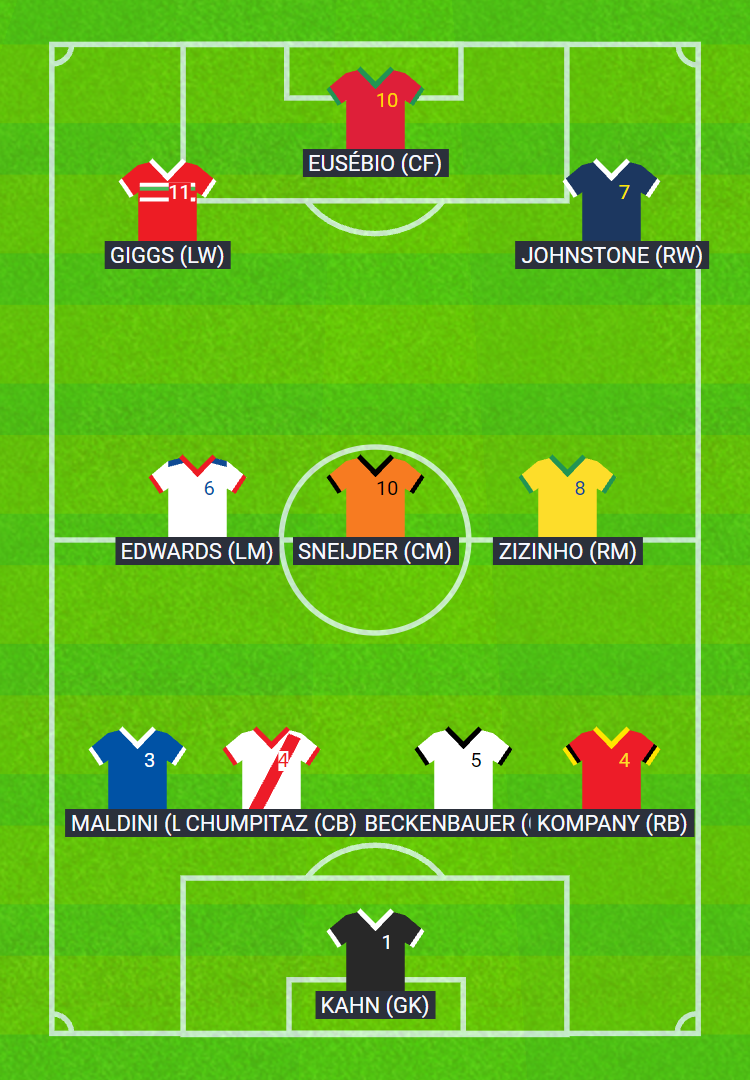
Yes. Back three, midfield diamond, proper wingers, two up front. Whatever suits. There are plenty of formations to choose from, based on how famous teams and managers have played them.
Can I change the shape a bit?
Yes. You’ve got some room to move players around within the formation. You might want your wingers wider, your full-backs higher or one striker dropping off the other.
It also depends who you pick. Two managers can put out a 4-4-2 and have very different ideas about how to play it. You’ve got that freedom too, within the room the editor gives you.
Do formation, balance and positions matter?
Yes. Eleven great names can still make a bad team. Someone has to defend, someone has to hold the midfield and somebody has to give you width.
You can move players around, but natural positions count. If a player had a few roles, use the one that works for your side.
How strict are the natural positions?
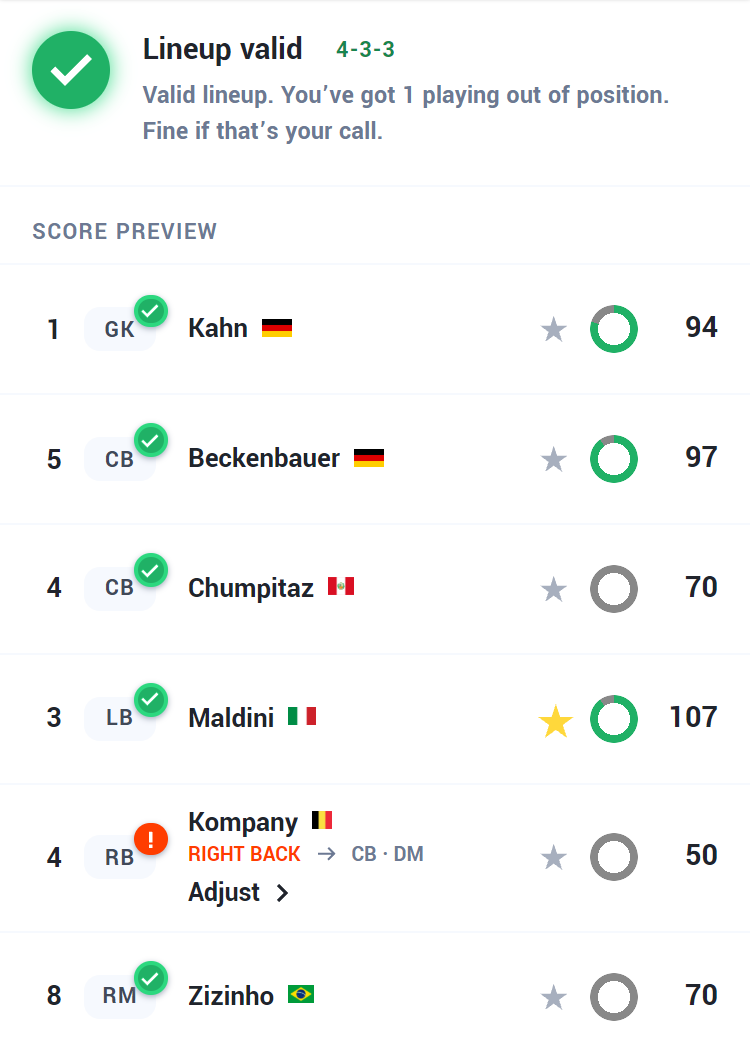
Not very. Messi at left-back? You can do it, but he won’t get the extra points for a natural position there. At right midfield, it depends where you put him. Too deep, no bonus. Higher up on the right, yes. The editor shows you the fit before you submit. It’s still your XI.
What affects the player ranking?
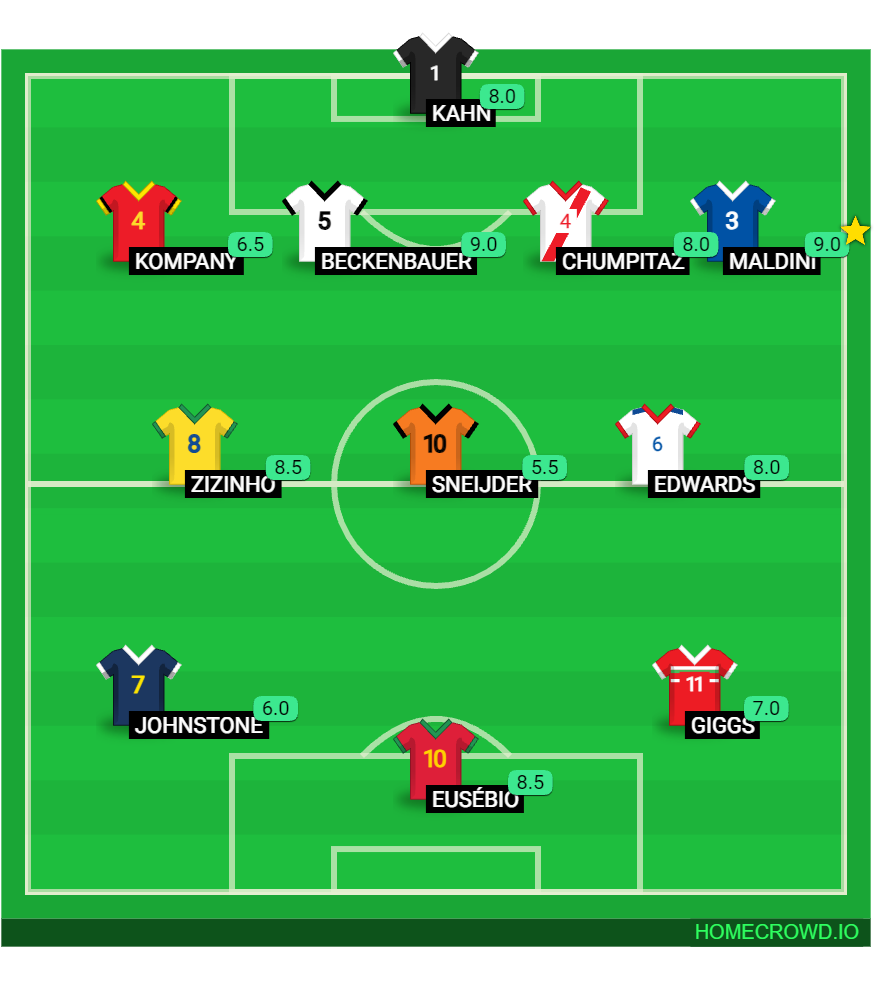
Making the starting XI matters most. Ratings, natural positions and the MVP pick add to it. Your choices give players points. The ranking comes from those points.
Do I have to rate the players?
No. Your XI is enough. Ratings and the MVP are there if you fancy doing a bit more.
How does Homecrowd keep the vote fair?
Every player gets roughly the same number of chances in the draw. We rank them on points per squad appearance, so being drawn more often does not give anyone a head start. Dodgy votes can be left out.
How random is the squad draw?
It’s random, but weighted. Every squad gets enough keepers, defenders, midfielders and forwards to build a valid XI. Players who’ve been shown less often get better odds in the next draw. Nobody is forced in. Over time, that keeps appearances across the 475 players close to even without turning it into a fixed rotation.
What is the Crowd XI?
It’s the best XI based on the current votes. Today gives you the daily snapshot. This week gives you the weekly one. It goes for the strongest team in each formation, so a lower-ranked player can still make the XI if he fits the shape better.
Why is the ranking moving so much?
Early on, a few votes can turn the ranking upside down. It settles as more XIs come in. Check Vote Progress before you lose your head over it. And share this damn thing, please. A proper crowd verdict takes loads of votes.
Why are we aiming for 100,000 votes?
Simple stats. You wouldn’t judge a team’s entire season on the first ten minutes of matchday one. If 475 legends only get a handful of votes, the table looks completely bizarre.
Each vote hands you a 44-player squad. Once we hit 100,000 counted votes, that’s 4.4 million squad appearances logged. That gives every player roughly 9,300 chances on average to get picked.
Early doors, a few rogue votes can send an average player flying up the table or make an absolute legend look ordinary. The more votes we get, the clearer the big picture becomes across different squads and formations. One dodgy lineup won't ruin the standings.
100,000 is the benchmark. It’s not like a magic whistle blows and makes the list 100% perfect, but it gives us a fan-voted ranking with real weight behind it. And we won't stop there—the vote stays open so the table keeps evolving.
How was the 475-player pool built?
We went through hundreds of lists. Full Ballon d’Or rankings. Player of the Year awards. Players of the Tournament. Picks from Pelé, Maradona and other greats. FIFA lists. Lists by fans and pundits. And plenty more.*
That gave us a massive starting point.
But we didn’t want just another list of the same 50 or 100 famous names everybody knows. Of course the obvious legends had to be there. So did the players who come up after the third pint, and a few greats from outside the usual spotlight. We made room for a few wildcards from countries that rarely get a look-in, too.
So we went bigger: 475 players.
Then we went back through the whole thing by position, era, profile and country to get the balance right. You had to be able to build proper teams from it, not just name 11 forwards and call it a team.
It was a fucking headache, and AI could only help so much. No one-shot AI slop here. 475 all-time greats. Broad enough to argue about. Balanced enough to build a side from. Plenty of interesting names to try in your XI.
Your job to decide who belongs at the top.
Why is a player missing? Where are Jude, Lamine and Pedri?
Jude, Lamine and Pedri were born after 2000, so they’re too young for this vote. The 475-player pool covers greats born between 1900 and 2000. A vote for the generation after Messi and Cristiano Ronaldo is in the works.
Why aren’t Messi or Ronaldo in my squad?
They’re both among the 475 players. Your 44 is a fresh draw each time, so even the biggest names can miss out. Have another go and you might get one of them. Or both, if the draw’s feeling generous.
If one player is in, shouldn’t another be too?
Fair shout. We could argue about the last few places all day. But there are only 475 spots, and the pool needs players from different positions, eras and countries. Add every name someone makes a case for and there’s no end to it. Bring one in, someone else has to make way.
We’ve also kept room for enough defenders and a few wild cards from smaller football nations, even if that means leaving out a stronger player in a few cases.
What is the Arena?
The Arena is where two fan-picked Best XIs go head to head. You’re the pundit: home win, draw or away win? Your call helps shape the Arena table. It doesn’t touch the player rankings.
How does my vote enter the Arena?
Bit of luck, bit of football nous. A strong 44-player draw helps, but you can still turn it into a Sunday league mess. Take your time over the squad and bench, sort your shape, and rate players or pick an MVP if you fancy.
If your vote passes the Arena checks, your XI joins the pool for matchups. That’s just getting through the gate. Making the Arena table is bloody hard: your XI needs enough games, then has to earn a place in the Top 100. And if the pundits are idiots and keep backing the other side, even your masterpiece may never get there.
How can I improve my chances of making the Arena table?
You can vote more than once. Every fresh 44 is another shot at building a better XI. Take your time with the squad and bench, pick a side that works, and add ratings or an MVP if you’ve got a call to make.
Spam it and you’re shooting yourself in the foot. Rushed or suspicious votes can miss the Arena altogether. Even a good XI still needs enough matchups and strong results to break into the Top 100.
(*) Player pool references
Fine sources we turned to while putting the player pool together, plus a few archives and more good football reading. Thanks to the writers, researchers and contributors who make this football history accessible. Our 475-player pool is our own selection. You decide the live ranking.
- RSSSF: A generous, freely accessible archive built by football researchers and contributors. We appreciate the care taken to preserve historical results and polls, including work by Karel Stokkermans, José Luis Pierrend, Roberto Di Maggio, Rob Moore and many others. [1] [2]
- The Guardian: Its annual top 100 brings together an international panel. We appreciate the published ballots and the explanation of how the voting works. [3]
- FourFourTwo: The magazine has shared its love of football since 1994 through interviews, analysis and player lists. Its selections across different decades are a welcome companion to the all-time debate. [4] [5]
- kicker: Its long-running Rangliste offers a valuable view of players in their own era. Historical Lineups also deserves credit for preserving older editions and making that work easier to explore. [6]
- France Football: The Ballon d’Or and the Dream Team have brought generations of players into the same conversation. Its award history remains a valuable reference, with older voting records also preserved by RSSSF. [7] [8] [9]
- World Soccer: The magazine’s international outlook and readers’ awards offer a welcome view beyond a single league. Its award history, with detailed ballots collected by RSSSF, records how players were regarded during their careers. [10] [11]
- Onze Mondial: The French magazine, originally called Onze, lets readers make their choices through the Onze d’Or. RSSSF preserves the historical results, keeping that long-running fan perspective within reach. [12]
- Guerin’ Sportivo: Adalberto Bortolotti’s I 50 Grandi del Secolo adds an Italian perspective to the century debate. We’re grateful that RSSSF keeps a record of this magazine series alongside other historical selections. [2]
- Planète Foot: Its 1996 selection records how the greats were remembered at the time. RSSSF has kept this part of French football publishing available to later readers. [2]
- Voetbal International: Raf Willems’s Wereldsterren gallery celebrates leading players through the Dutch magazine’s weekly profiles. Preserved by RSSSF, it gives readers space to appreciate the players without assigning each a place in a countdown. [2]
- Il Venerdì / la Repubblica: The Italian magazine’s 1997 100 Magnifici selection looks across countries and generations. We’re grateful that RSSSF has kept this older publication within reach. [13]
- Placar: A valued Brazilian voice in the conversation about football’s greats. Its magazine archive and all-time elections give Brazilian football’s own writers a place in that history. [14] [15]
- El País (Uruguay): Its Rey de América award keeps South American football at the centre of the discussion. The newspaper’s poll coverage and RSSSF’s historical tables bring together local reporting and earlier results. [16] [17]
- El Mundo (Venezuela): The newspaper’s historical South American player award is preserved in RSSSF’s records. It adds an important regional voice alongside the later El País awards. [17]
- The Independent: Its football writers’ Century countdown is a thoughtful companion to broader historical lists. [18]
- ESPN: Its men’s 21st-century ranking adds another editorial voice to the discussion of modern greats. [19]
- Sky Sports: Rob Parrish’s 2007 report records FourFourTwo’s choices as they were being discussed at the time. Contemporary reporting like this helps keep an older list in context. [20]
- FIFPRO: The World 11 brings professional footballers’ own choices into the picture. Its historical archive is a valuable record of how players have recognised their peers across successive seasons. [21]
- UEFA: Technical observers assess performances from a coaching perspective when choosing tournament teams. The published selections and reports offer a helpful view of roles, team balance and the football behind the awards. [22] [23] [24]
- FIFA: Its World Cup award histories help put individual performances in their tournament setting. The wider references include Pelé’s FIFA 100 selection, preserved by RSSSF, and FIFA’s separate performance rankings. [25] [26] [27]
- IFFHS: Its work on football history and statistics includes historical player and goalkeeper elections. Those century ballots, also collected by RSSSF, offer a useful perspective on earlier generations. [28] [29]
- European Sports Media (ESM): Member publications’ monthly choices feed into seasonal XIs, giving sustained performances their due. RSSSF preserves the early seasons, including the individual magazine votes. [30]
- Professional Footballers’ Association (PFA): Teams of the Year chosen by fellow players bring a perspective worth listening to. The PFA’s Team of the Year archive helps trace that recognition across seasons. [31]
- Bundesliga / EA SPORTS: The official Team of the Season combines fans’, clubs’ and experts’ choices. Its published selection gives useful recognition to a full XI and the different jobs players do. [32]
- LaLiga / EA SPORTS: The league’s Team of the Season announcements recognise performances across the pitch. These season-specific selections are a useful companion to awards that focus on a single winner. [33] [34]
- Association of Football Statisticians (AFS): Its historical top 100 approaches the all-time question through recorded achievements. RSSSF preserves the list, allowing readers to compare that approach with journalists’ and fans’ choices. [35]
- Historical Lineups: Careful work on old teams, lineups and player classifications gives football history real detail. Its collection of kicker ratings helps readers look beyond familiar all-time lists.
- Iconic Football: An independent project built from historical ratings, awards, footage and wider research. Its explanation of the method is worth reading alongside the positional lists and decade XIs.
- Football’s Greatest: Players are organised by their roles, with notable club and national teams alongside them. It is a thoughtful way to explore how great individuals fit into great sides. [36]
- FBref: The historical World Cup Golden Ball table brings award winners together in one place. It is a helpful companion to the tournament organiser’s own account. [37]
- Wikipedia: Volunteer editors bring together award histories, tournament selections and references to original reporting. We appreciate the work that makes it easier to follow a source back to its publication. [38] [39] [40] [41]
- Mundo Deportivo: The newspaper’s own archive keeps earlier football reporting available to readers. Those editions preserve the stories around players and awards as they were told at the time. [42]
- Bibliothèque nationale de France: Its catalogue identifies France Football titles, supplements and library holdings. We appreciate the careful work that helps readers trace an older magazine issue. [43]
- Biblioteca Nacional do Brasil: The national library’s Hemeroteca Digital preserves Brazilian newspapers and magazines. It is a valuable starting point for finding contemporary reporting and the local voices behind football history. [44]
- The Magazine Archive: Digitising back issues keeps older football writing within reach. FourFourTwo recommends this archive for its early editions; collections are currently being moved to a new platform.